
Museum Week: Part 1
My favorite museums in America
I’m so tardy in writing this that I now have to post it in three parts. I originally intended to write a bit of a travelogue entry about some museums I visited last summer in Milwaukee and Minneapolis. That got me thinking about my favorite museums, which expanded things a bit. Then life got in the way. By the time I got around to piecing ideas together, I realized there was simply too much content for one post. So here we go.
I’ve written before about my love of museums, how they feel a bit like spiritual spaces. Museums are wonderful places to connect with oneself, with others (throughout history), and with something bigger than oneself. A good museum can be a reset button, after the world has worn you down, a place for one’s brain to breathe.
Here’s a list of my six favorites (in the US), as of the time of writing.
Chinati Foundation and Judd Foundation, Marfa, TX
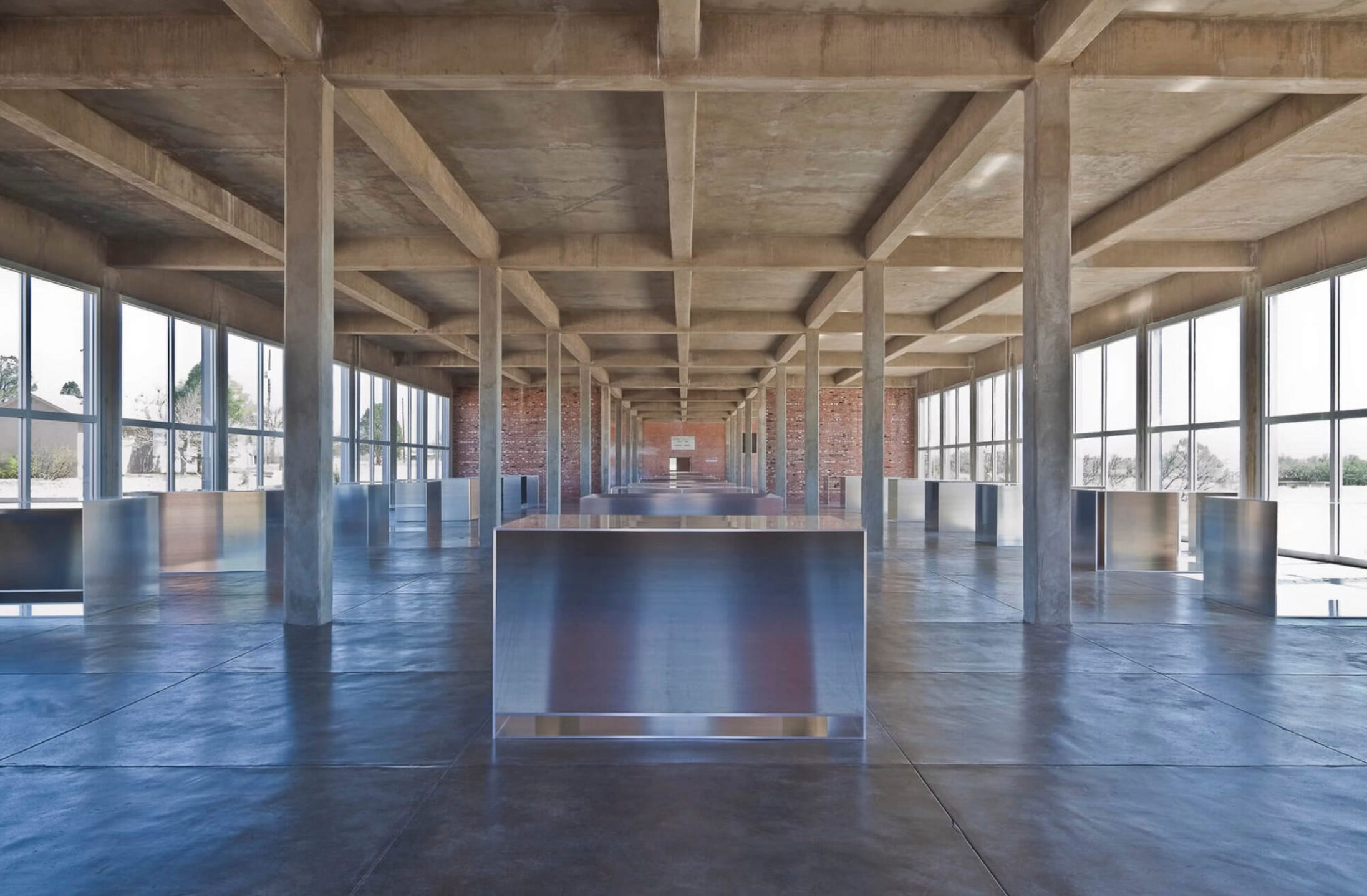
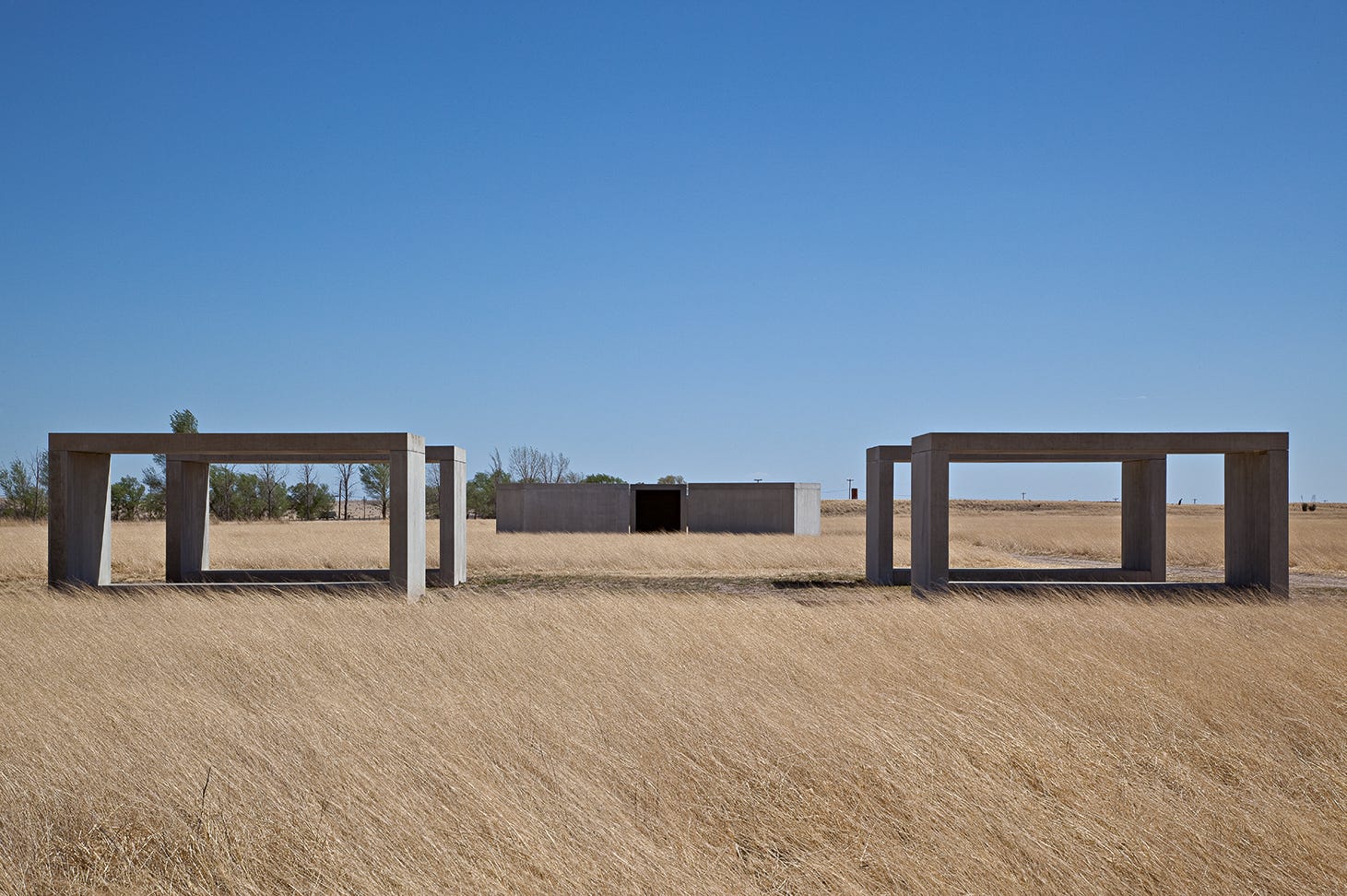
There is no place on earth that I enjoy more than the spaces inside and around the two former artillery sheds at the Chinati Foundation, which house Donald Judd’s 100 untitled works in aluminum. So, it’s easy to put the Chinati and Judd Foundations at the top of my list. Created between 1982 and 1986, each aluminum unit measures 41 x 51 x 72 inches, with variations in the structural composition of each of the units.
I love West Texas and I love Marfa, a town rightly placed in the middle of nowhere. It needs to be that far from anything to give you the feeling of being far from anything. Despite Marfa’s cultural hipness, it has always felt like a ghost town when I’ve visited, of which, I’m glad.
Why two foundations? In 1973, Donald Judd started creating a home and studio in Marfa, as well as exhibition spaces for his own work and that of his friends. He split the last twenty years of his life between West Texas and New York City. At the time of Judd’s passing, he owned much of the town of Marfa. Generally (though not entirely), Chinati includes the installation spaces for large-scale works, while the Judd Foundation maintains and preserves Judd’s homes, studios, and library spaces in Marfa and New York.
If you’re interested in an aesthetic experience to quiet your mind and soothe your soul (think Buddhist retreat, not Coney Island), Marfa’s a great choice. It takes a bit of effort to get there, as well as time needed to fully immerse yourself in the art, but that’s the whole point. I highly recommend the full day tours at both foundations.
Frederick R. Weisman Art Foundation, Holmby Hills, Los Angeles, CA
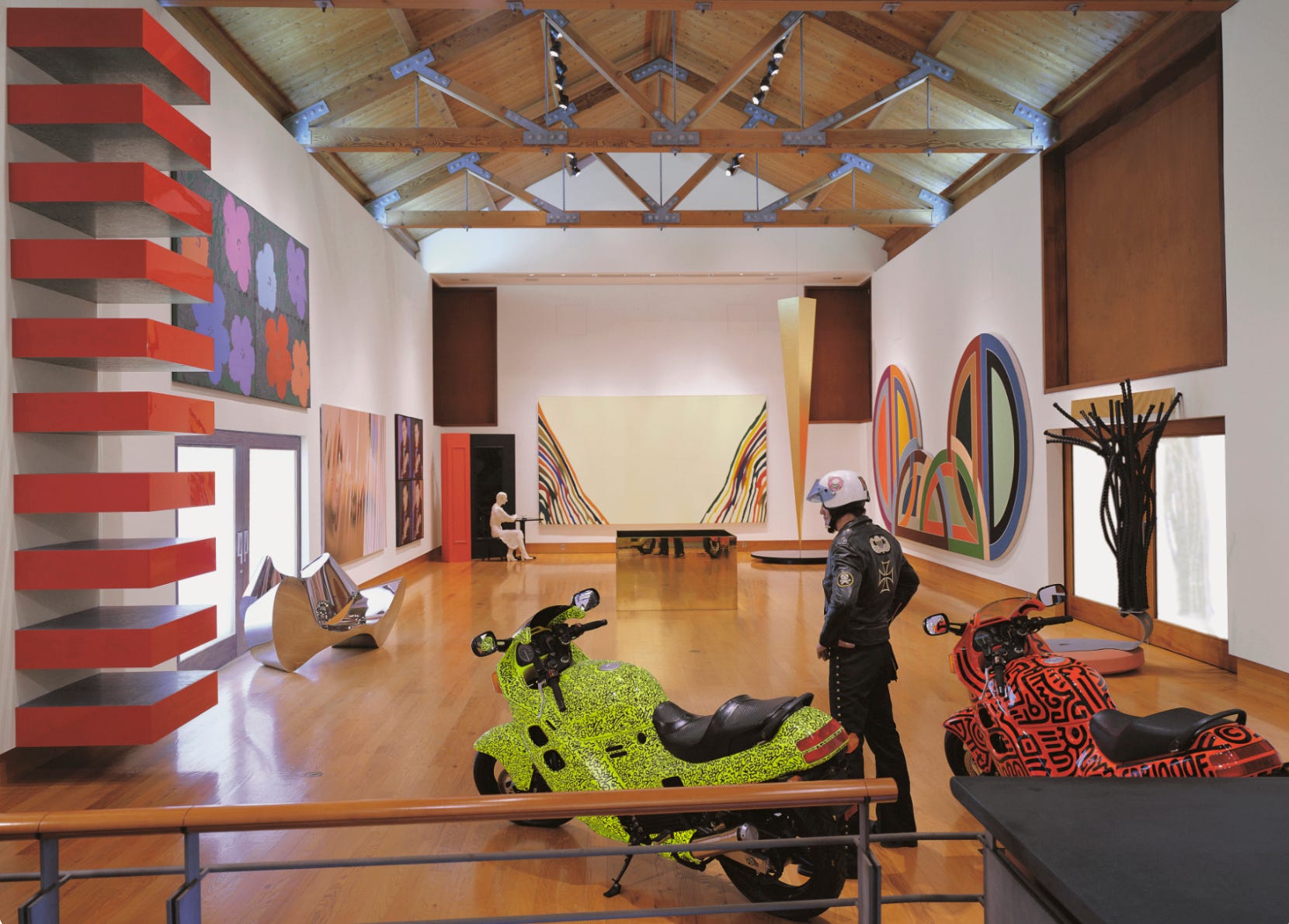
Though not technically a public museum, The Frederick R. Weisman Foundation’s collection (at least 400 pieces of it) can be seen only by private tour. Like the Chinati and Judd Foundations, the little bit of effort needed is totally worth it. You rarely hear anyone talk about the Weisman collection, even in LA, most likely because the Foundation doesn’t advertise, and can’t be seen on a major street. It can hardly be seen even on its small residential street. As the Foundation’s collection lives in the home Frederick and his wife, Billie Milam Weisman, resided in, with neighbors who’d prefer traffic at a minimum, there’s a necessity to keep a bit under the radar. Tours are available to anyone, but only a couple are offered each day and attendance is limited to eight to ten per tour, since parking is highly limited.
Once behind the gates, the 1920’s Kaufmann villa reveals itself, as do several sculptures by Botero, Marisol, and Henry Moore. Inside, the one-and-a-half-hour tour will guide you through one of the world’s finest collections of Modern Art, including major works by Clyfford Still, Rauschenberg, Picasso, Warhol, Ruscha, de Kooning and Rothko. As this was a home, this art viewing experience is unlike that of a traditional museum. You may have to walk around a four-poster bed to view a Jasper John’s piece, or peek around a duck-shaped lamp to view a Man Ray. And don’t forget to look up, or you may miss Ruscha’s The World and Its Onions, mounted on the ceiling.
With each of these museums, there’s so much to share, and I can only offer a glimpse. The museums’ histories, missions, architecture, setting, and collections all come together to tell a magical story. In this regard, The Frederick R. Weisman Foundation dazzles at every turn. No art lover should visit LA without taking a tour. For a perfect day, visit Canter’s Deli before or after the tour, or perhaps the Fountain Coffee Room at the Beverly Hills Hotel.
As a side note, the Foundation acquired one of my early watercolors, Mango Smoothie, for its permanent collection, many moons ago, and it’s an incredible honor to be part of their collection.
The Art Institute of Chicago, Chicago, IL
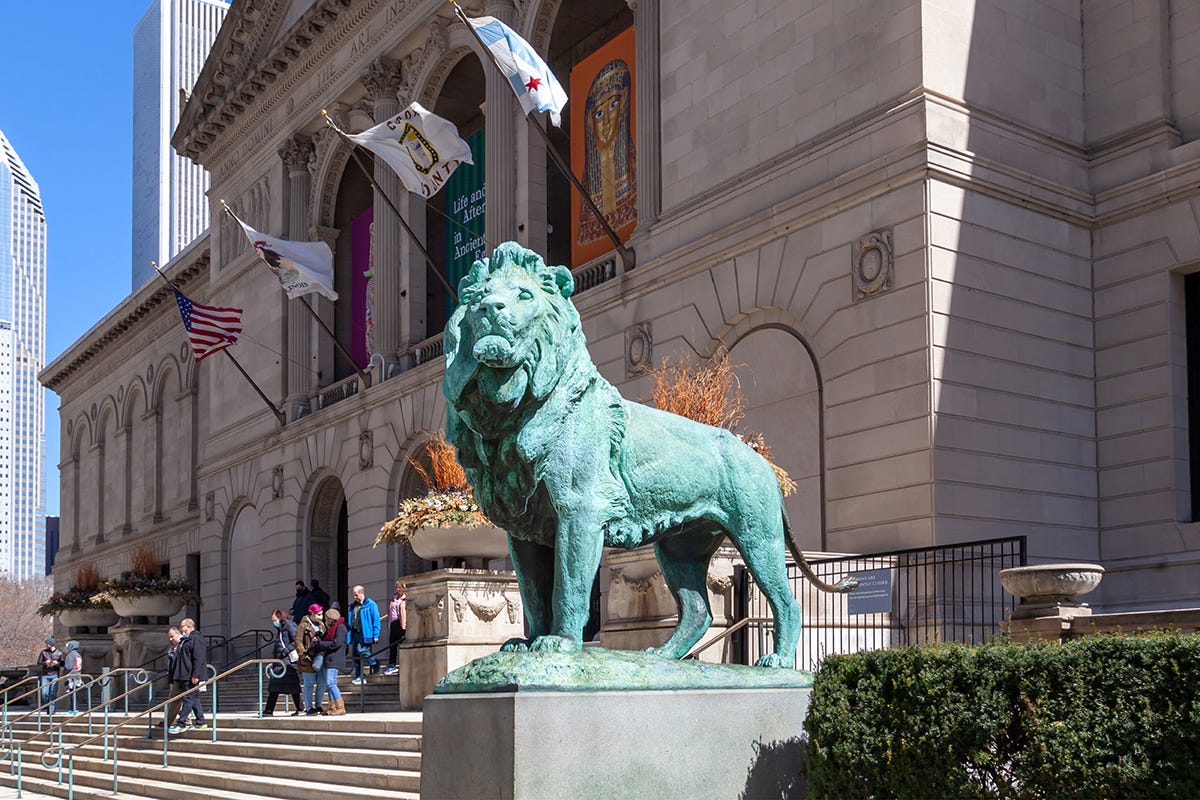
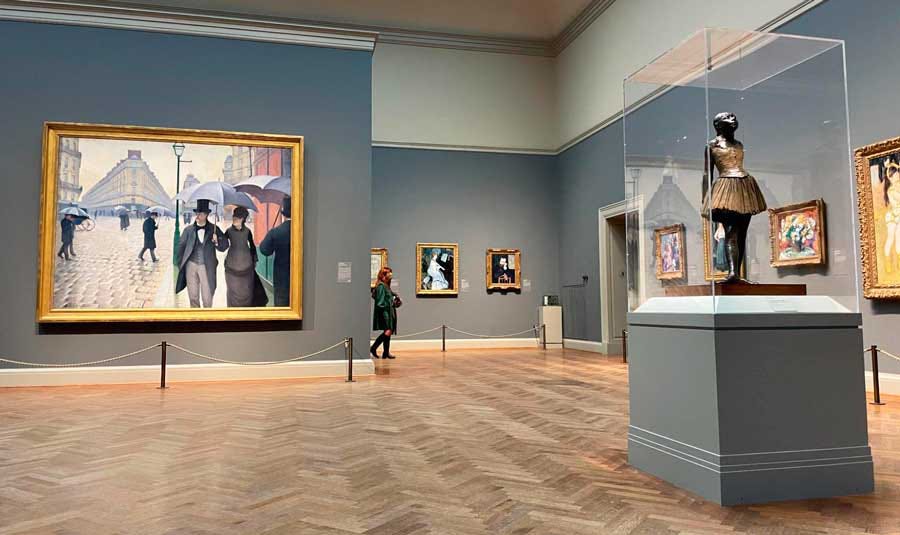
For me, and I’m guessing many others, The Art Institute of Chicago is America’s finest large art museum. I’m not typically a fan of large museums, due to their crowds and overwhelming spaces, but the Art Institute is a masterpiece. Yes, you’ll leave exhausted, but your heart will be full.
Though one can enter through the Modern Wing on East Monroe, it’s important to say a quick hello to the lions at the historic Michigan Avenue entrance. I almost feel like I’m taking a beating in this museum, being knocked over by awe, room after room. Eva Hesse (my personal fave), Van Gogh, Seurat, Degas, Grant Wood’s American Gothic, Hopper’s Nighthawks. It’s unfair. There’s no chance to breathe. Hell, this could be America’s greatest cultural institution.
I’d be remiss if I didn’t remind you of this scene from Ferris Bueller’s Day Off. I’m not sure if the Art Institute has included an homage to John Hughes’s work in its exhibition spaces. If it hasn’t, it really should. This piece has become its own iconic American masterpiece and the most beautiful tribute to the museum.
MASS MoCA, North Adams, MA
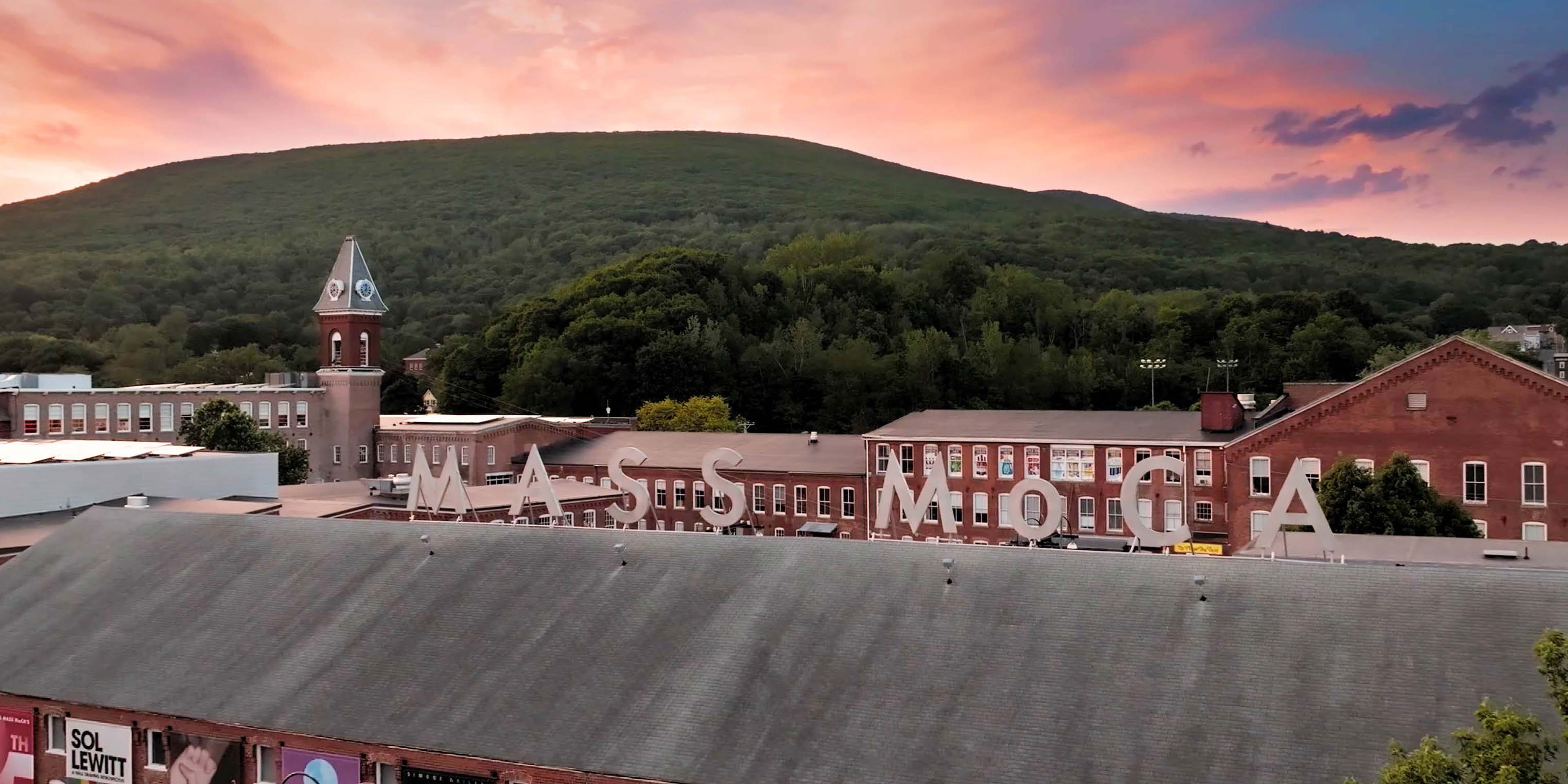
The first time I visited MASS MoCA, it was with my friends Dave and Shyla Lefner. It was one of those perfect, soft-snow days, and the museum was empty. Dave and I had just been part of a group show at Phillips Exeter Academy, and we were all beaming from our time with the students and community. We’d decided to take a few extra days to explore New England, and despite my own driving experience being limited to the Southwest, we braved some icy-dicey roads through rural Massachusetts.
We stayed at the adorable and cozy Porches Inn, just one block and across the river from MASS MoCA. While my favorite memory from this experience was the enjoyment of MASS MoCA’s galleries with my dear friends, another, slightly less enjoyable but hilarious one stays with me as well. Shyla could be a world champion, if only they held contests for hot tub basking. Never seen anything like it. For years, we’ve all enjoyed a Jacuzzi, followed by a long lunch, followed by a museum visit, followed by a round of Yahtzee. Only after a full day of relaxing do we realize Shyla’s still in there, enjoying the bubbling, boiling waters, without a care in the world. Hours. Days! This woman knows no limits. So, despite the temperature of (maybe) six degrees outside, we foolishly checked to see if the Jacuzzi was working. Twenty minutes and a mustering of courage later, in the dead of night and completely alone, we got in. California natives that we are, Dave and I sunk as low as we could while still finding air to breathe. It started snowing again, and Shyla noticed how Dave and I looked like Japanese macaques, “snow monkeys.” Would I do it again? Absolutely, but I’d want Dave and Shyla with me.
Many years later, I asked Dave and Shyla what their favorite single day museum experience had been. We all agreed on this day. Pretty special.
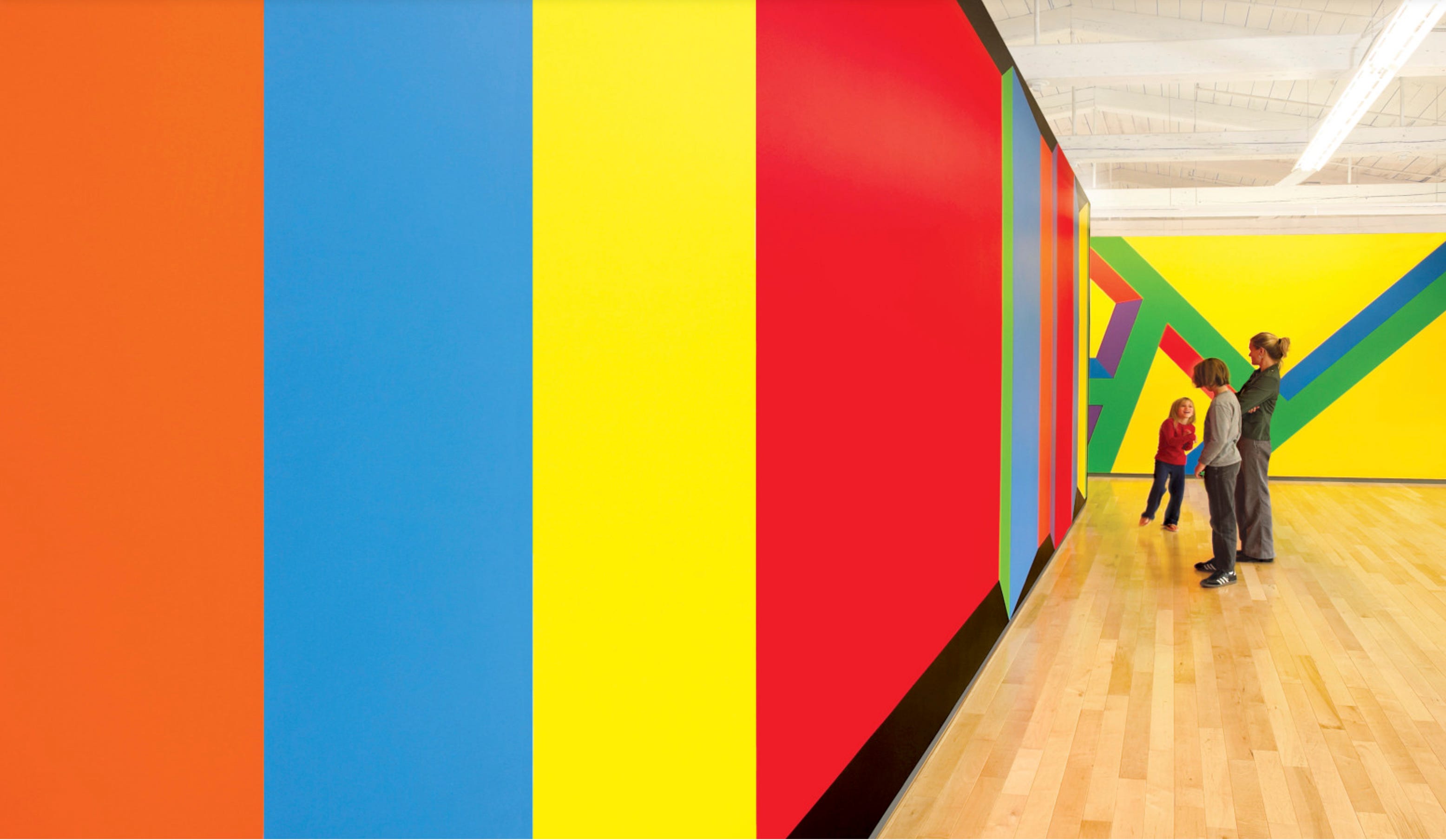
MASS MoCA is one of the largest contemporary art spaces in America. A former factory, its buildings and footprint are both massive and captivating. It’s a miracle they were able to pull it off. I love every inch of it, and although I’ve been back, I haven’t yet visited in the summer and would love to one day. My favorite space (spaces, really) is the massive exhibition of Sol LeWitt: A Wall Drawing Retrospective. It’s actually over 100 walls, shown over three floors. A banquet for the soul.
Museum of Contemporary Art San Diego, La Jolla, CA
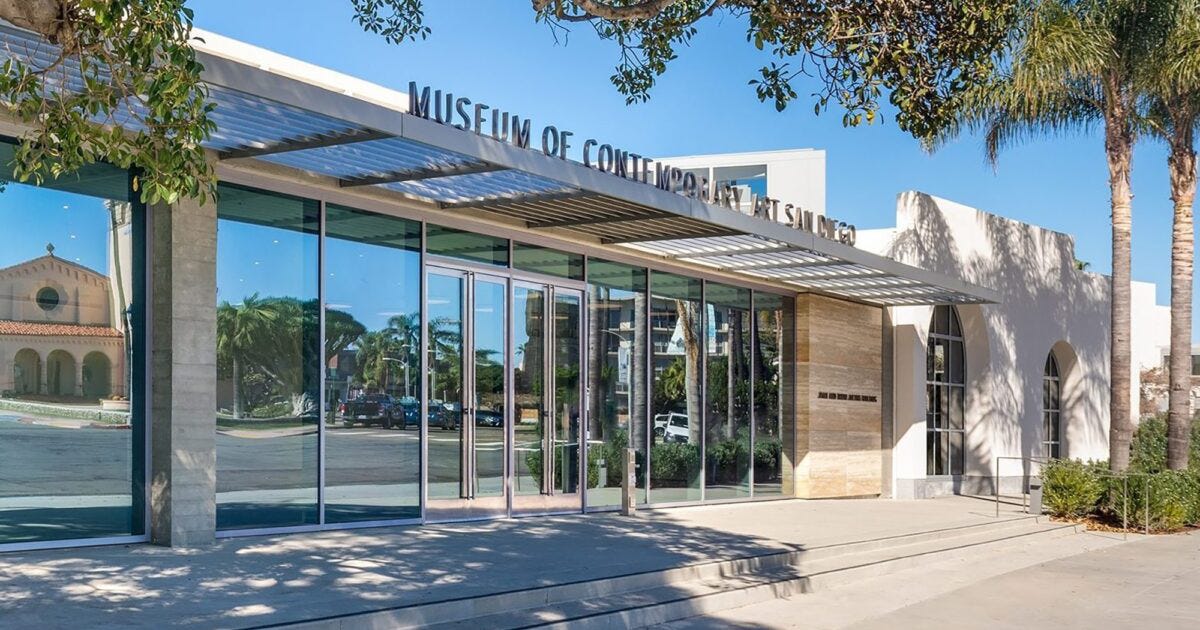
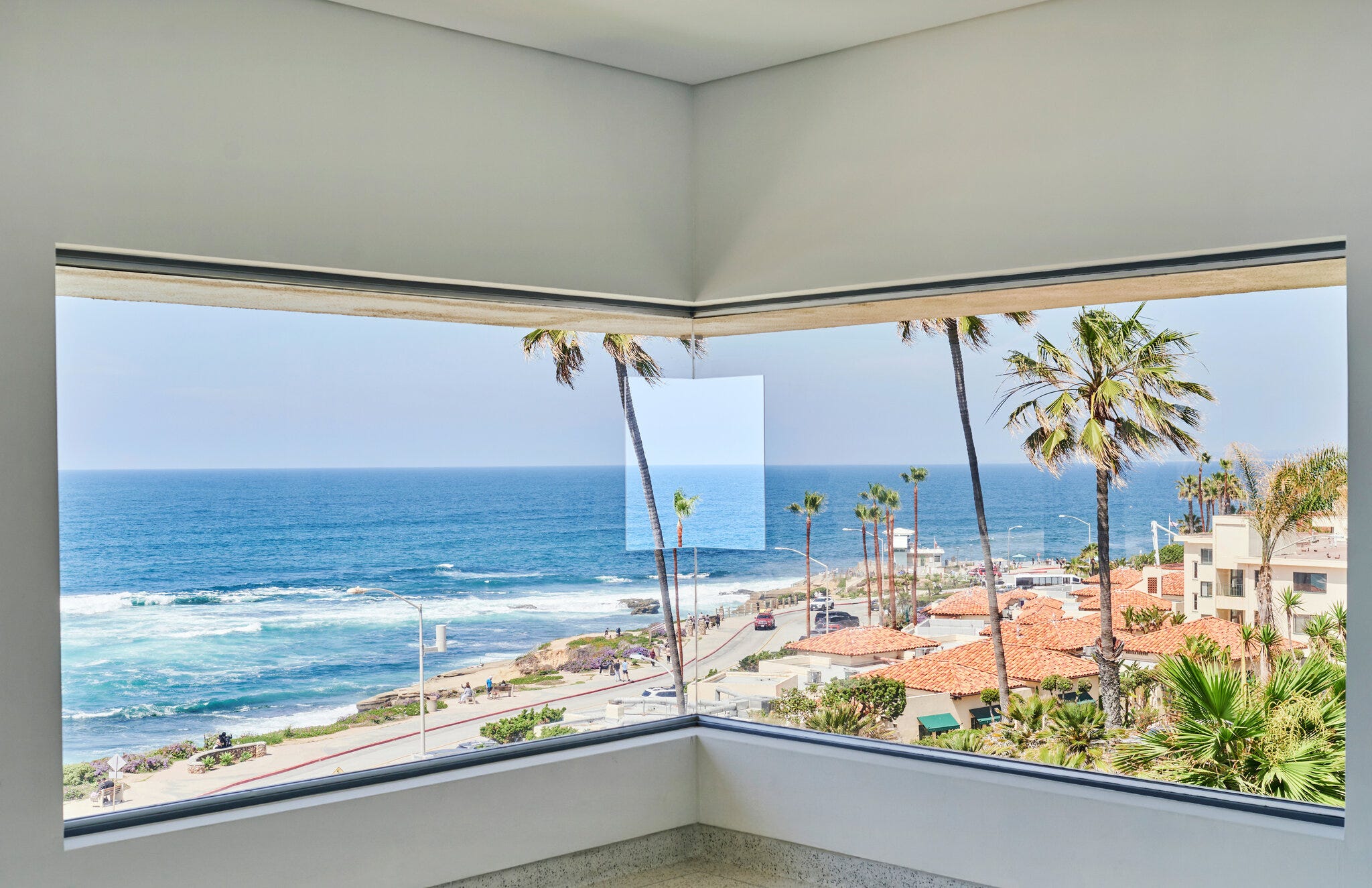
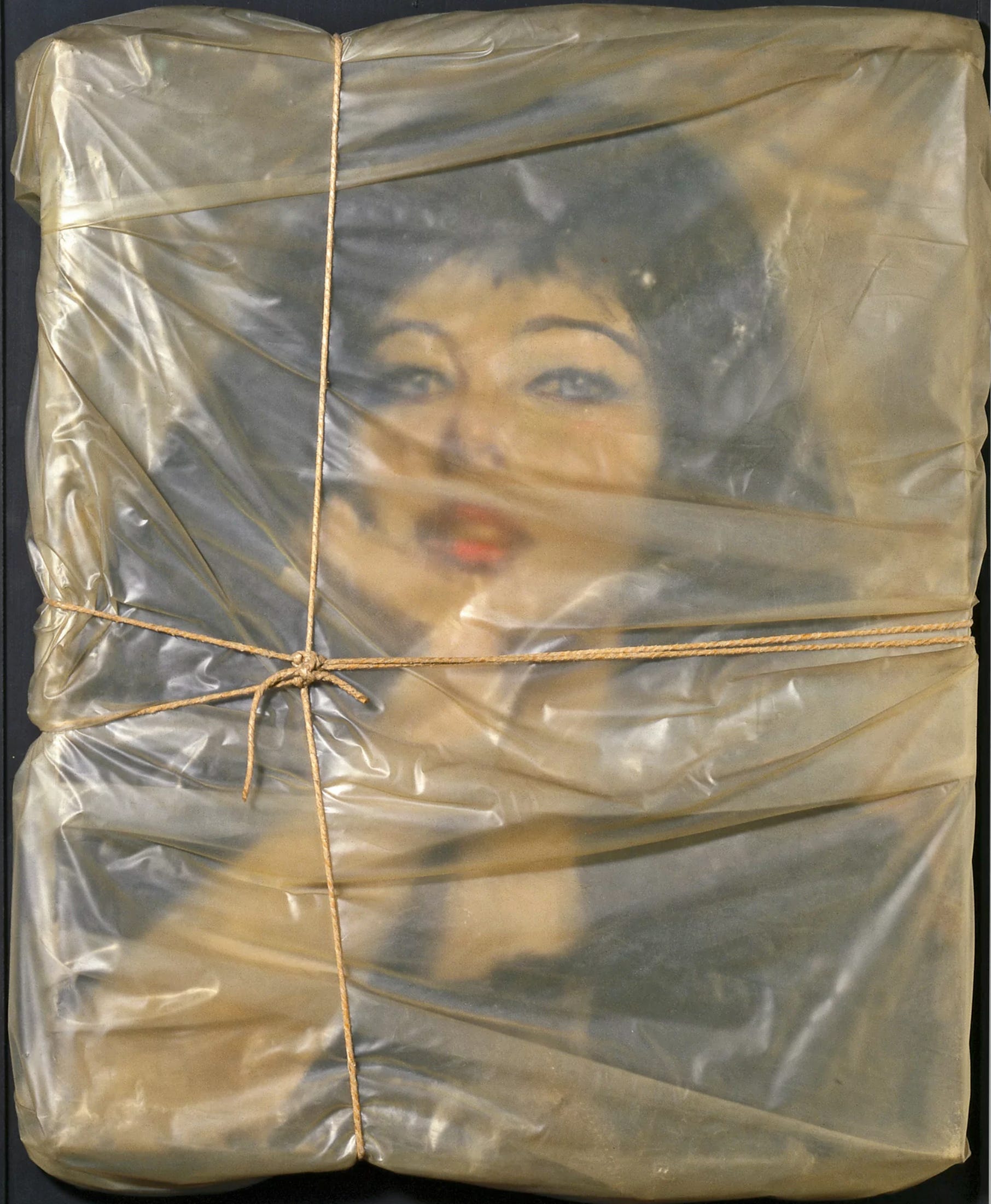
The Museum of Contemporary Art San Diego, which is actually in picturesque La Jolla, is the most recent of my museum discoveries on this list. A delightful light and airy, mid-sized museum, it checks a lot of my boxes.
As many of you know, I’m enamored with all things Ferus Gallery and the ‘60’s Los Angeles art movement. One of the most notable of the Ferus artists was Robert Irwin, a pioneer of the Light and Space movement. The Museum of Contemporary Art San Diego has the largest institutional collection of Irwin’s work, including the iconic 1997 piece, 1°2°3°4°. This piece alone is worth the visit. Physically speaking, this work consists of three holes, or open spaces, in windows. Wait! Open air in a museum? Is that allowed? Won’t the natural, salty ocean air ruin the other works in the museums? I started sensing some outside air, a bit of a natural draft, a couple gallery spaces before I turned the corner, but I only questioned my senses. This couldn’t be. But it was, and is. I was overcome with the joy of having my rock solid reasoning overturned. I rushed in, took it in quickly, and ran to the front of the museum. I had to ask the museum staff, “how is this possible?” They confirmed my suspicions. Yes, the air will do what it will. Pieces might get damaged. That said, the rooms corresponding with this are filled with only Irwin’s earlier works, and this was his vision. This is one of the great qualities of art, the element of surprise, like a child opening a holiday gift. May we never lose our sense of wonder.
I love Irwin’s work, so this museum is a very happy place for me, but there’s one other piece that almost knocked me over when I first saw it, by one of my favorite artists. Christo’s Wrapped Portrait of Jeanne-Claude, is just that, a wrapped painting of Christo’s wife and collaborator, Jeanne-Claude, and it’s genius.
If you love the beach and art, this is the place to be. A collector of my work has a home just a few blocks from the museum. On a recent visit, we rented kayaks and paddled our way to just below the back of the museum, where seals and cliff divers compete for space. Sublime.
Palm Springs Art Museum, Palm Springs, CA
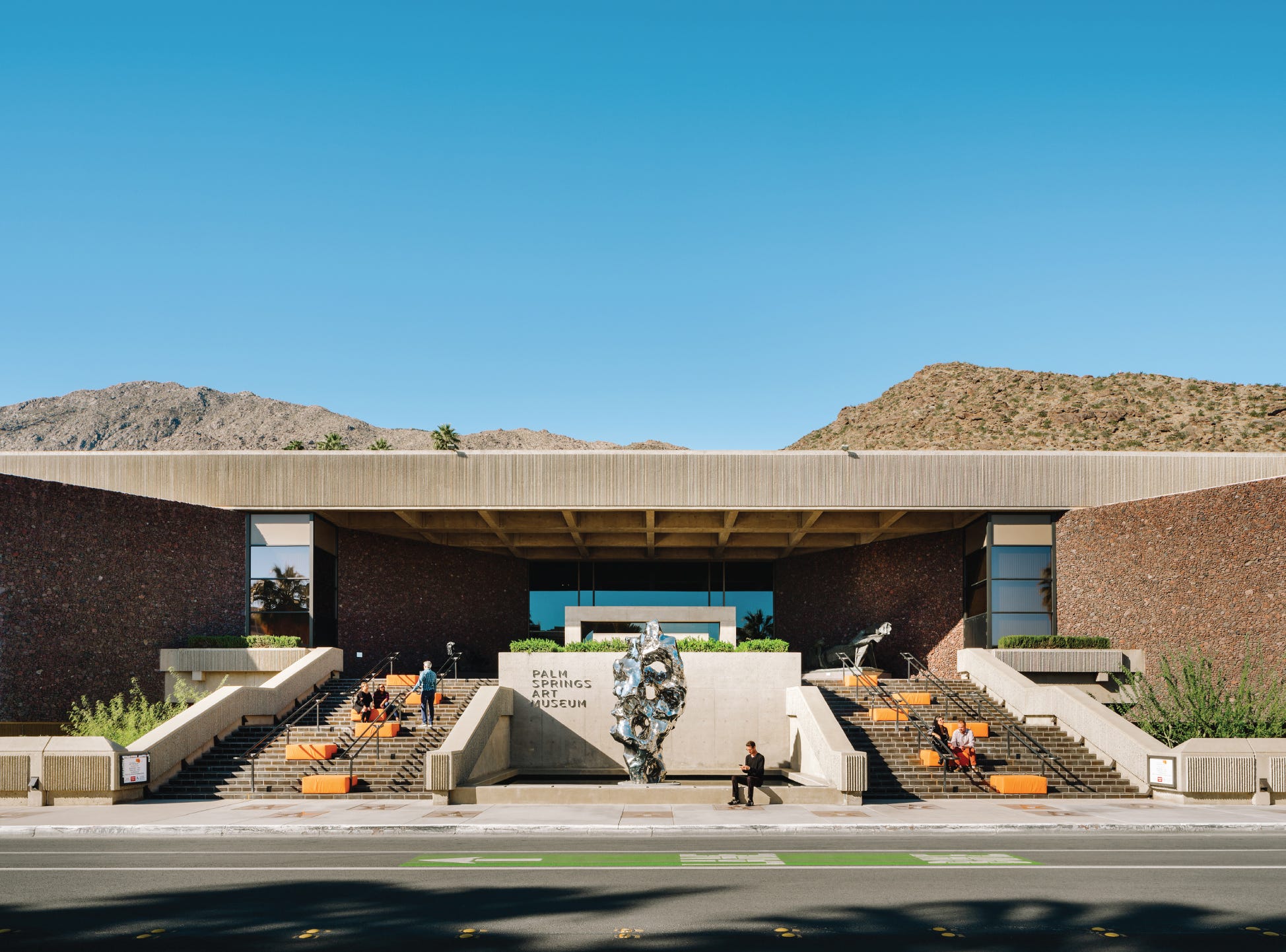
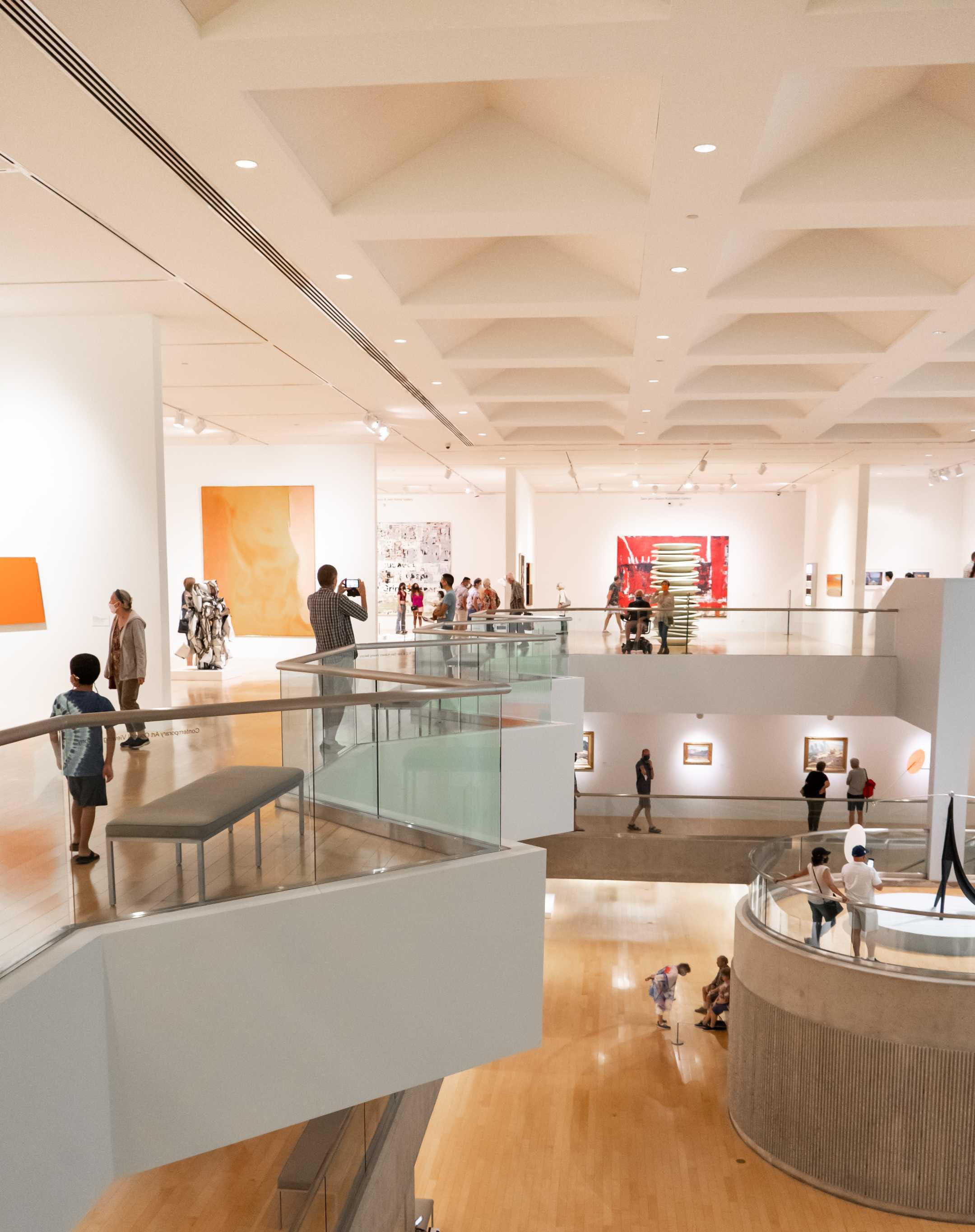
My favorite city, Palm Springs: land of palm trees, swimming pools, mid-century architecture, and the Palm Springs Art Museum. Of the museums on this list, the Palm Springs Art Museum feels most like home, as I’ve been visiting frequently for decades. Visiting Palm Springs is like taking a Master class in aesthetics, so it makes sense that it would have an amazing museum. The museum also offers an Architecture and Design Center, equally worth visiting, just a few blocks from its main building.
My first memory of the Palm Springs Art Museum is the 2009 exhibition, Wayne Thiebaud: Seventy Years of Painting, which had a serious impact on my career. California, and therefore California Art, is all about light and color. The impactful shows have just kept coming, including the 2019-20 exhibition, Alexander Girard: A Designer’s Universe.
If you’re going to Palm Springs for one day, here’s what to do:
Take a dip in a pool.
Visit the flagship Trina Turk store.
Visit the Palm Springs Art Museum.
Have a slice of cake at Sherman’s Deli.
Have another slice for me.